08/10/2026 Papers

AI Concentration and the European SMID Opportunity

Why combining fundamental insight with machine learning is especially powerful in an under-researched market

Since the COVID-19 pandemic, equity markets have been reshaped by a series of powerful forces: higher interest rates, rising government debt, sticky inflation, repeated energy shocks, geopolitical tensions and an unprecedented AI capital-spending boom among US hyperscalers.

That boom has helped propel several markets to record highs, including the technology-heavy Taiwanese and Korean markets, while cushioning the US economy against consumer weakness caused by elevated interest rates and trade tensions.

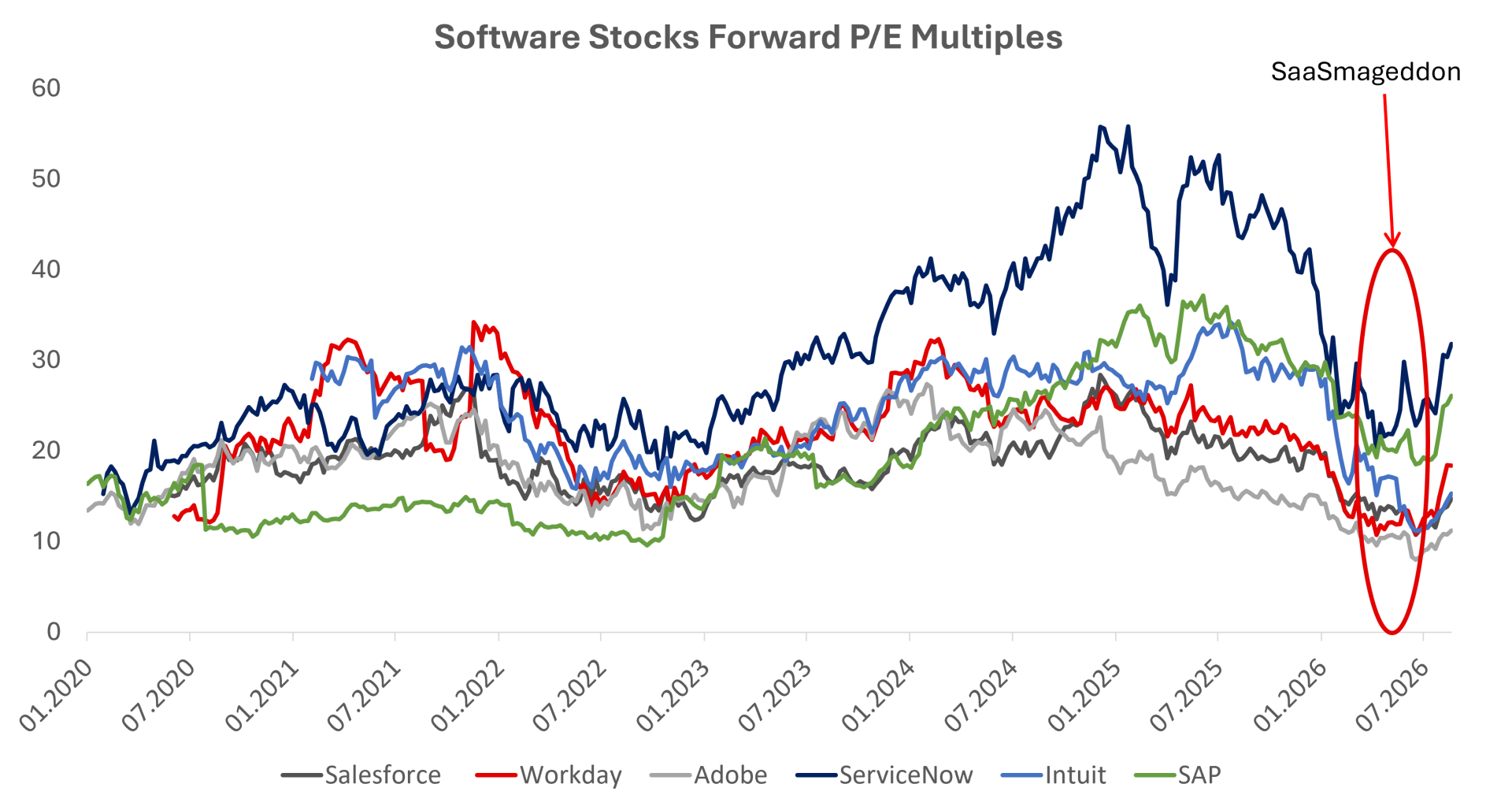
Yet the AI theme’s compelling multi-year growth potential has come with a darker side. China’s DeepSeek moment in early 2025 raised fears that US hyperscalers might not need to spend as heavily on AI. Early 2026 brought the “SaaSmageddon,” which cut the valuations of incumbent software companies by as much as half amid concerns that AI would erode their future revenues.
Source: Bloomberg. Data as at 31.08.2026

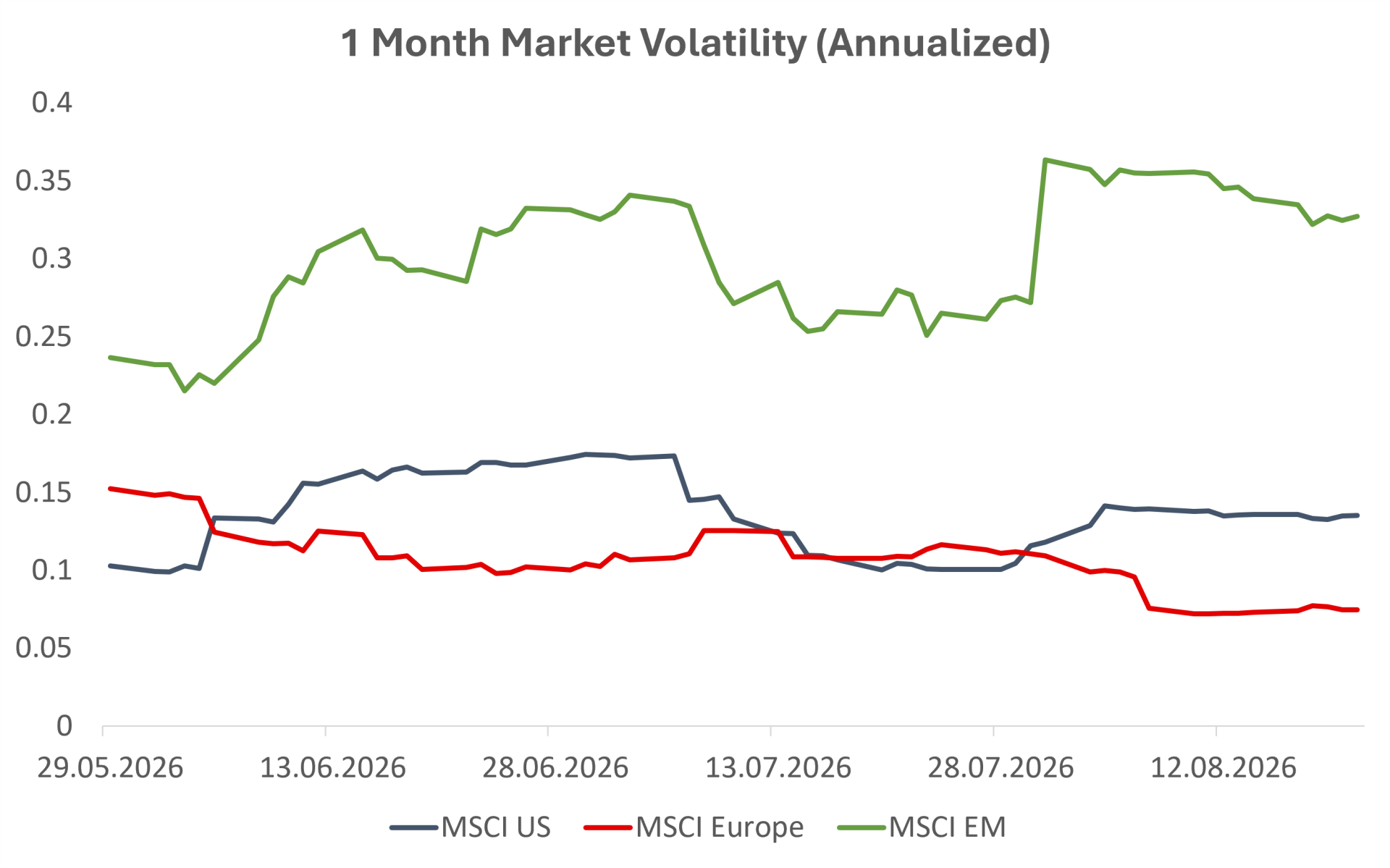
The risks surfaced again during a bout of extreme volatility in Korea in the summer of 2026, when the KOSPI fell nearly 40% in July following an AI-driven rally led by enablers such as SK Hynix and Samsung Electronics. The preceding rally had drawn in large numbers of often-leveraged retail investors, who represent roughly half of the market, as they feared missing out on the AI boom.

The Need for Diversification

Against a backdrop of shifting geopolitics, stretched valuations and increasingly concentrated exposure to AI, investors have greater reason to diversify in order to protect capital. Europe’s relative scarcity of listed AI enablers, compared with the US and selected emerging markets, helped insulate its equity markets from similar volatility this summer. It has also attracted investors seeking thematic exposure beyond the AI trade.

Source: Kepler Unigestion, Bloomberg. Data as at 31.08.2026.

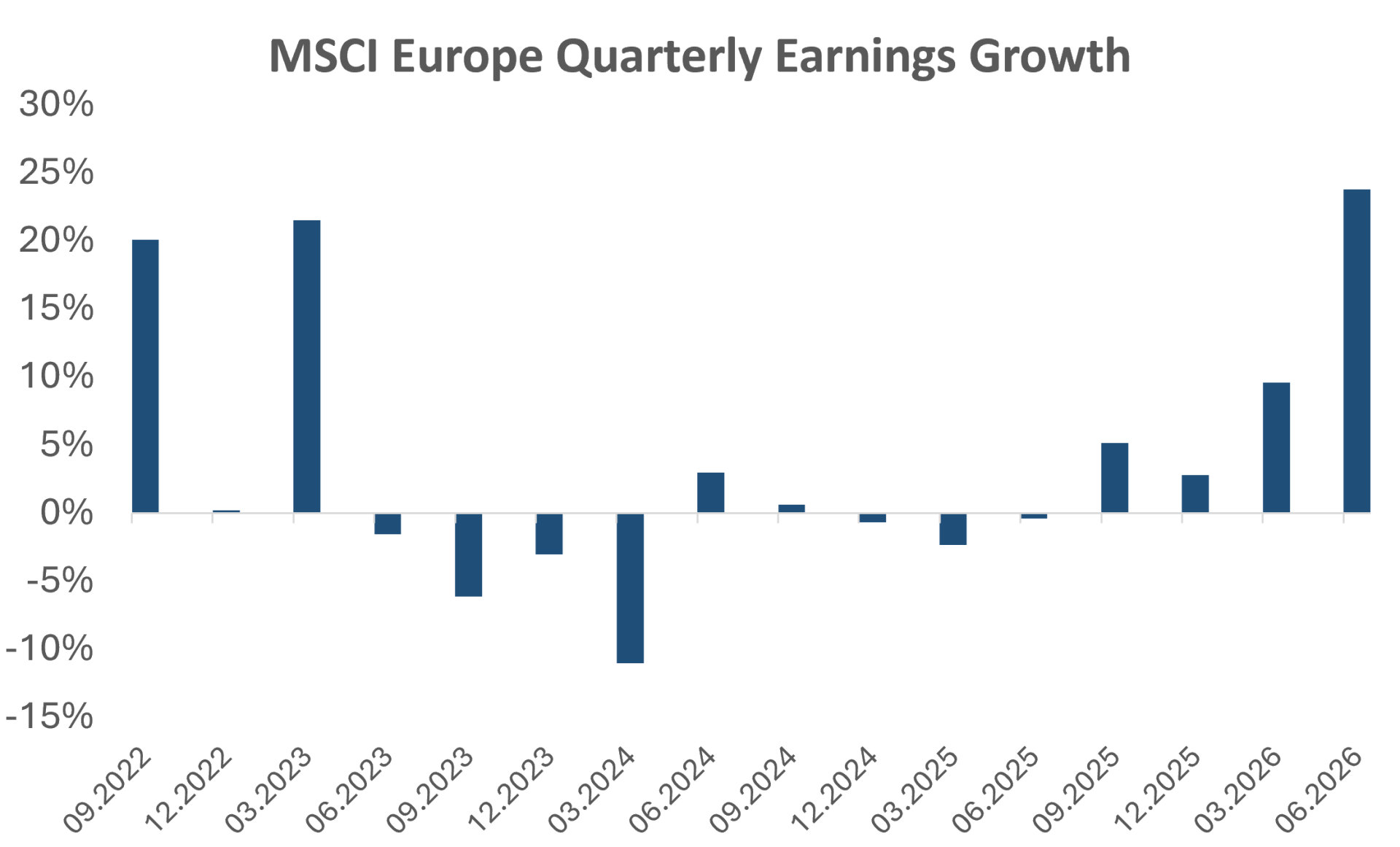
Europe recently delivered its strongest earnings season in years, lifting analysts’ forecasts for 2026 earnings growth to nearly 20%, from just over 10% earlier in the year. Banks combined resilient net interest and fee income with lower-than-expected credit losses, while industrial companies converted expanding backlogs across structural-growth markets — including electrification, infrastructure, data centres and defence — into higher revenues and margins.

Source: Bloomberg. Data as at 31.08.2026.

We believe stronger fundamentals, continued portfolio diversification away from both the US and AI-heavy emerging markets, and the growing difficulty of underwriting further AI-related upside at current valuations should continue to support European equities.

Searching Beyond European Large Caps

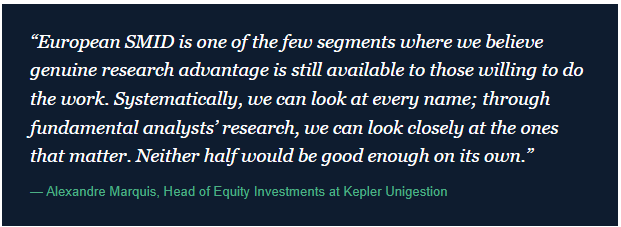
Within European equities, however, the small- and mid-cap segment merits particular attention. European SMIDs are well positioned to benefit from several secular growth trends within Europe to which larger, more internationally diversified peers typically have lower beta. Infrastructure upgrades, grid modernisation, data-center buildout, supply-chain resilience, and rising defence and industrial-sovereignty spending amid geopolitical tensions should disproportionately benefit SMID companies, given their greater exposure to European end markets.

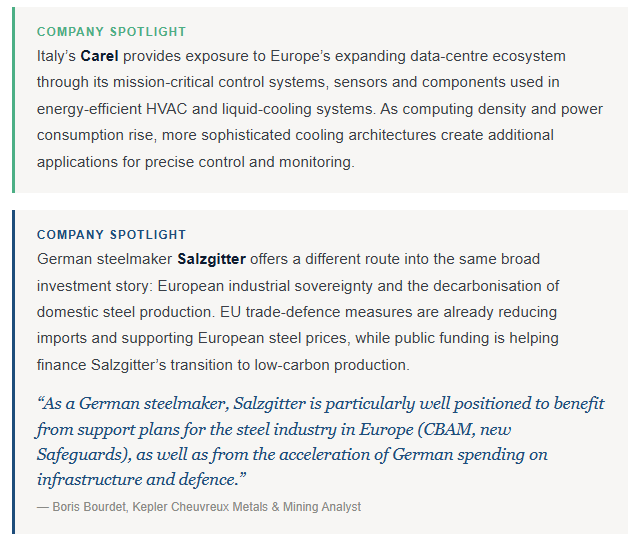
The latest earnings season offered evidence of that potential. Within capital goods, the strongest performances came from companies positioned to capture long-term demand across electrification, data centers, gas turbines, e-mobility, energy-efficient HVAC and liquid-cooling systems.

Companies are shown for illustrative purposes only and do not constitute an investment recommendation. References to individual securities should not be construed as a recommendation to buy or sell such securities.

The scale of regional investment is already substantial. Germany has established a €500bn special fund for infrastructure and climate neutrality through 2036. In neighbouring France, transmission system operator RTE plans to invest approximately €100bn in the electricity grid over the next 15 years, around half earmarked for electrification needs.

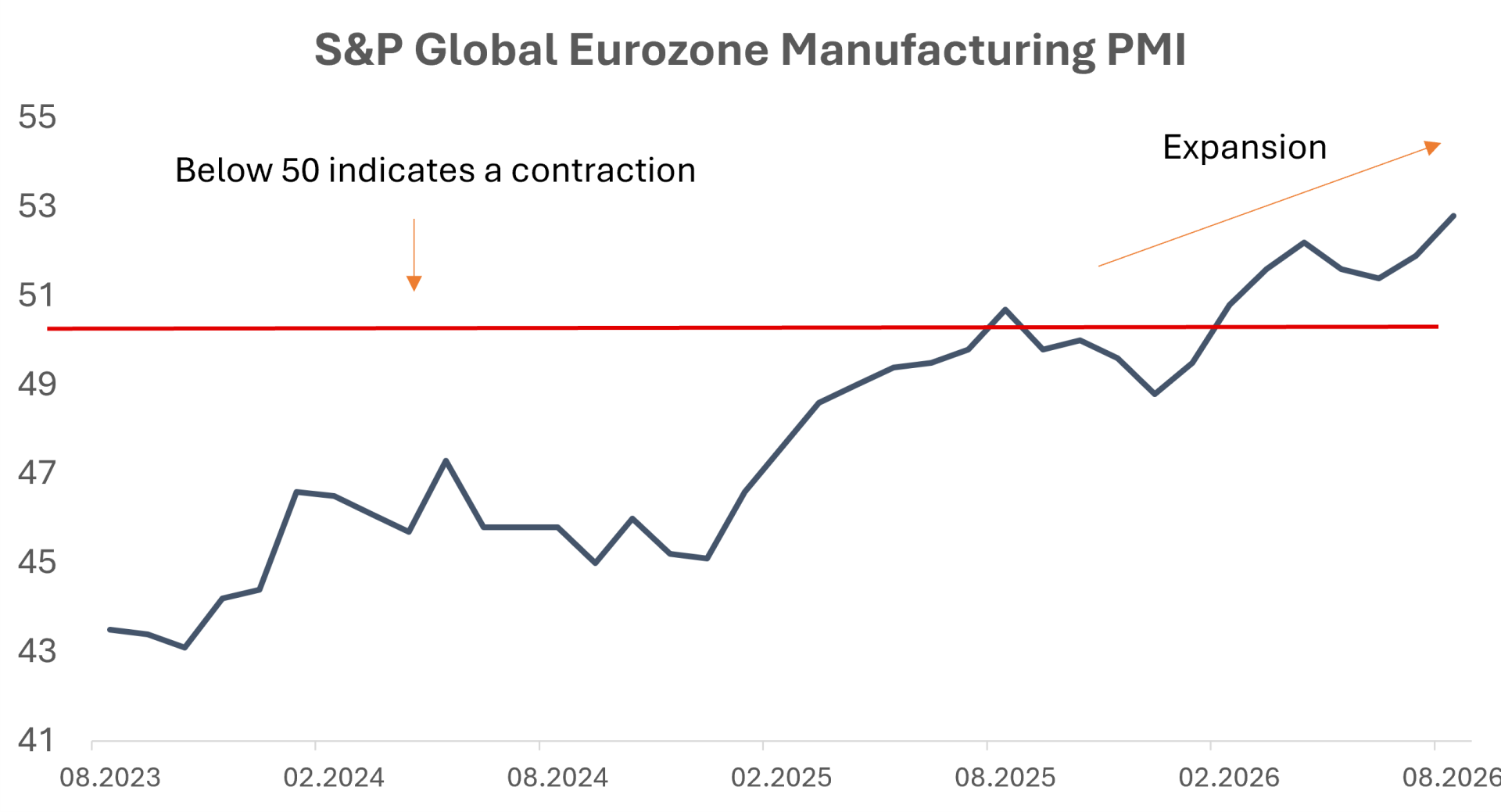
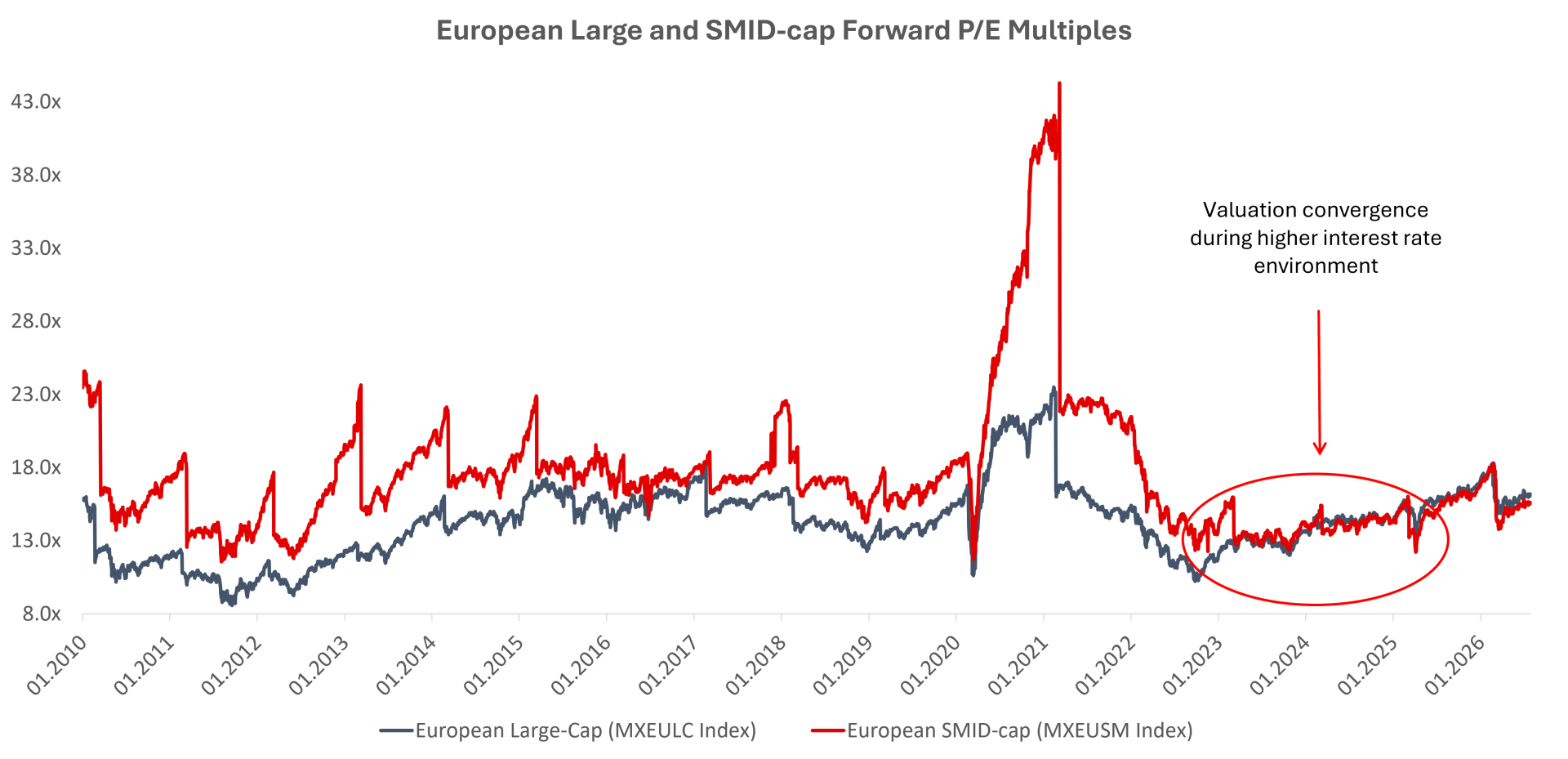
Valuations add another layer to the case, but it is their combination with an improving earnings outlook that makes European SMIDs worth considering now. The segment currently trades at a forward P/E discount of approximately 4% to large caps, compared with a historical premium of roughly 20%, while offering ~14% earnings CAGR over the next three years, outpacing large-cap peers. Importantly, earnings revisions have been improving alongside a firmer manufacturing backdrop: the eurozone’s manufacturing PMI reached its highest level in just over four years in August.

Source: Bloomberg. Data as at 31.08.2026.

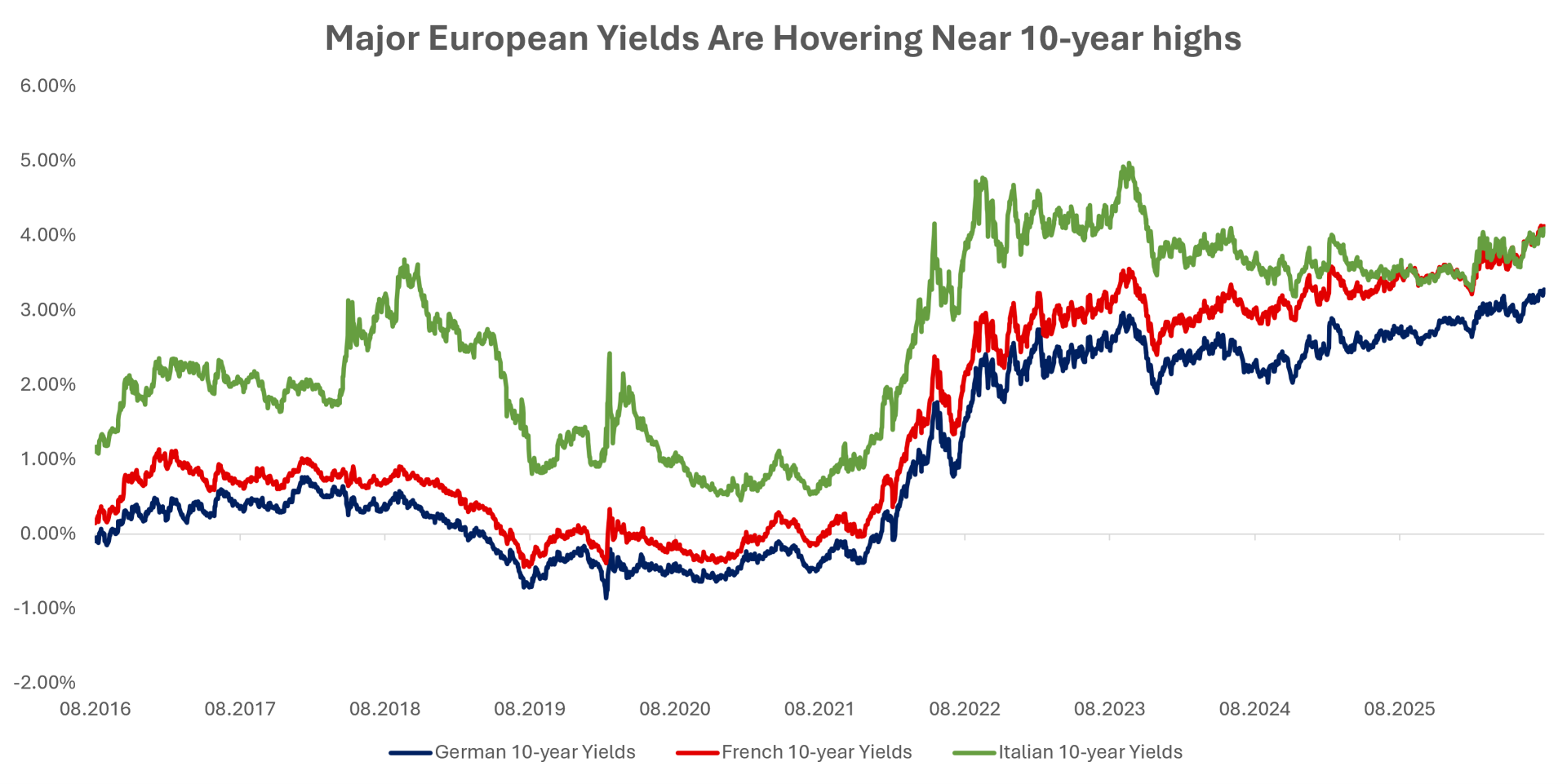
We believe this combination strengthens the case for investing in European SMIDs. Improving earnings prospects could provide a catalyst for investors to reassess discounted valuations, while Europe’s longer-term infrastructure, electrification and industrial-sovereignty investments offer a source of demand beyond the immediate cyclical recovery. Any stabilisation in European sovereign yields could provide additional support, although inflation concerns and fiscal uncertainty could keep term premia elevated for longer.

Source: Bloomberg. Data as at 31.08.2026.

The opportunity nevertheless remains selective. Attractive spending commitments, thematic exposure and relative valuations do not guarantee alpha. In aggregate, SMIDs face a higher interest burden relative to earnings than their large-cap peers, which can constrain the cash available for reinvestment and shareholder distributions. Investors must therefore identify SMID companies that combine direct earnings exposure to structural growth themes with pricing power, balance-sheet strength, execution capacity and sufficient stock liquidity.

Mind & Machine

European SMIDs may offer particularly fertile conditions for stock-selection alpha. The segment tends to have fewer analysts, lower institutional ownership and less frequent investor engagement, allowing earnings revisions and operational changes to be incorporated into share prices more slowly.

Systematic models can continuously scan this broad universe for such changes and translate them into relative stock weights and sector and country positioning. The large number of SMID stocks also allows models to construct a broader set of relatively independent positions, potentially improving portfolio diversification and the information ratio.

While European SMIDs have traditionally been the domain of fundamental stock-pickers, we believe that combining mind and machine can provide a more powerful and repeatable route to identifying potential sources of alpha. Systematic and AI-enabled models offer breadth, speed and consistency in screening for potential emerging opportunities across the entire universe, while fundamental analysts provide the judgement required to distinguish temporary noise from durable change and assess pricing power, balance-sheet resilience, execution capacity and liquidity.

This document is provided for information and marketing purposes only and does not constitute investment advice or a recommendation to buy or sell any security. Past performance is not a reliable indicator of future results; the value of investments can fall as well as rise. Reference to specific securities is for illustration only and is not a recommendation to buy or sell. Views and expectations expressed are those of Kepler Unigestion as at the date of publication, are based on current market conditions and are subject to change without notice. Forecasts and forward-looking statements are not guarantees of future results and may not materialise.